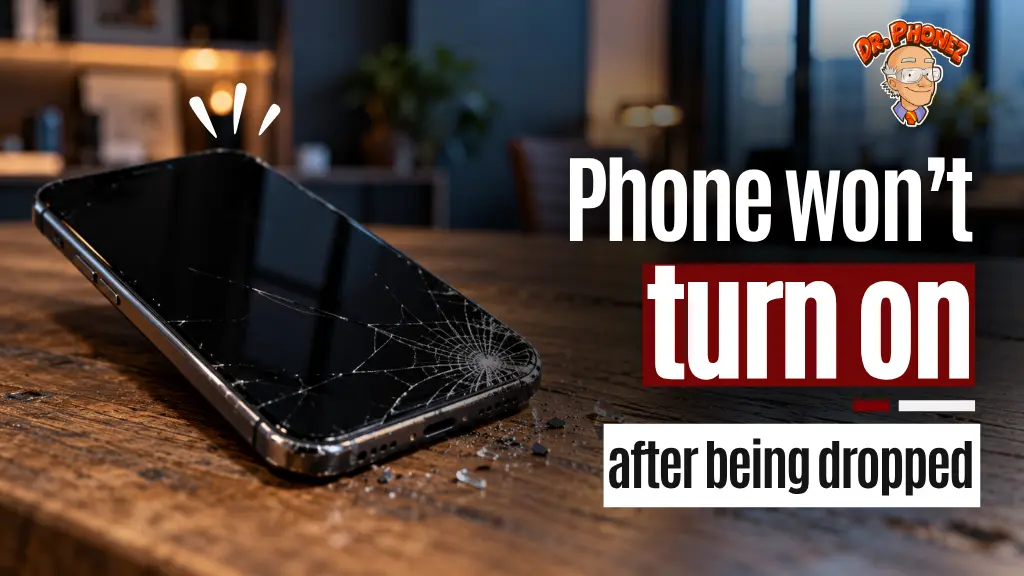
You dropped your iPhone. The screen cracked. Now you are stuck deciding whether to fix it or buy a new one.
Most people answer that question too quickly, either by replacing a phone that was perfectly repairable or by spending money on a repair that does not make financial sense. The right answer depends on the type of damage, how old the phone is, and what repairs actually cost for your specific model.
Not All Cracked iPhone Screens Are the Same Repair
Most people treat a cracked screen as a single problem with a single fix. There are actually three distinct types of damage, and the cost and decision logic are different for each.
Cracked glass with a fully functional display:
The outer glass is broken, but the screen still shows colours accurately, touch responds normally, and there are no dead zones or dark patches. This is the most common situation technicians see. The OLED panel beneath the glass is intact, so you are paying to replace the glass assembly only, which is the lower-cost option across all iPhone models.
Cracked glass with display damage underneath:
Lines across the screen, discolouration, black patches, flickering, or areas where touch no longer responds all point to OLED or LCD damage beneath the glass. This requires a full display assembly replacement rather than just the outer glass. It is still worth repairing on most phones made in the last three years, but the numbers shift.
Complete screen failure after a drop:
The screen is entirely black or unresponsive. This could be a display failure, a disconnected flex cable, or, in some cases, a motherboard issue. A free diagnostic is the right next step before any decision. Not every black screen is a screen problem, and assuming it is leads to unnecessary spending.
Confirm which of these three situations applies to your phone before comparing any numbers. The damage type determines the repair cost, which determines whether fixing makes financial sense.
Warning Signs Your Cracked Screen Needs Immediate Attention
Some cracked screens can wait a few days. Others cannot. These are the signs that the damage is getting worse and needs to be looked at right away.
Black spots appearing or spreading on the display indicate the OLED layer is being crushed from the impact point outward. Once this starts, it does not stop on its own. Flickering or sudden brightness changes point to a damaged display connection. Touch that stops responding in specific areas means the digitiser beneath the glass is compromised. Visible sharp glass edges along the crack are a physical safety risk and also allow debris and moisture to enter the device directly.
If any of these are present, waiting is not a neutral decision. It is an expensive one.
The Hidden Cost of Leaving It Unrepaired
Using a cracked phone for weeks while deciding what to do carries a financial risk most people never factor in.
The front glass on an iPhone is a structural part of its water resistance seal. Once it cracks, that seal is broken. San Antonio summers regularly push above 95 degrees Fahrenheit, with humidity averaging around 67 percent annually. Moving between air-conditioned interiors and outdoor heat causes condensation to form inside the phone, and moisture now has a direct entry point through the cracked glass.
What starts as a straightforward glass repair can quietly develop into water damage on the display connectors, charging circuit, or motherboard. A clean, affordable repair when the crack was fresh becomes a compound and significantly more expensive problem weeks later.
There is also a trade-in impact most people never calculate. A cracked screen reduces resale and trade-in value by 15 to 40 percent depending on the device and severity of damage. Repairing the screen before selling or trading in frequently produces a better net financial outcome than handing over a damaged device. Most people skip this calculation and consistently make the more expensive choice.
iPhone Screen Repair Cost: What You Are Actually Paying
Costs vary depending on where you take the device and what grade of replacement screen is used.
At Apple directly, out-of-warranty screen replacement ranges from around $149 for older models up to $379 for current Pro Max models. These repairs use genuine Apple displays, maintain True Tone and ProMotion on supported models, and do not affect your remaining warranty. With AppleCare+, the same repair drops to $29 per incident regardless of model. Apple pricing can change, so always confirm current rates at apple.com before making a decision.
At independent walk-in repair shops, including locations in Stone Oak and along San Pedro Avenue in San Antonio, pricing typically runs 20 to 50 percent less than Apple’s out-of-warranty rates. For most iPhone models, independent shop pricing falls between $80 and $200, depending on the model and screen grade used.
The most practical decision framework is the 50 percent rule. If the repair costs less than 50 percent of what your iPhone is currently worth in working condition, repair is almost always the better financial choice. Check current prices for your specific model on Swappa or eBay. Use that figure, not the original purchase price, as your benchmark.
When Repairing Clearly Makes Sense
A screen repair is the right call in most situations where the phone is relatively recent and the damage is limited to the screen itself.
If the phone is under three years old, it still receives iOS updates, carries strong resale value, and has years of life ahead. The iPhone 14, 15, 16, and 17 lineup all fall into this category in 2026. Spending $80 to $200 on a screen repair to protect that investment is consistently the sound decision.
If only the screen is damaged and everything else works normally, including battery health above 80 percent, a functional charging port, and working cameras, a single screen repair is the clearest possible case for fixing rather than replacing.
If you are still making payments on the device, replacing it means carrying two costs simultaneously. Repairing and continuing to use the phone until it is paid off almost always makes more financial sense.
When Buying a New iPhone Makes More Sense
There are specific situations where a repair is not the right answer, and recognising them saves money in the long run.
If the device is four or more years old, fixing the screen is a short-term fix to a longer-term problem. In 2026, an iPhone 11 is approaching the end of Apple’s software support window. A repaired screen does not solve declining performance, security vulnerabilities, or app compatibility issues that come with an ageing device.
If multiple components are failing simultaneously, a cracked screen combined with a battery below 80 per cent and a charging port issue means stacking repair costs against each other. When the combined repair bill approaches or exceeds the cost of a comparable refurbished device, replacement becomes the more logical call.
If the repair cost exceeds 50 per cent of the device’s current value, the financial argument for repair weakens significantly. And if you were already planning to upgrade before the screen cracked, this is a reasonable moment to act on that decision rather than spend on a repair for a phone you intended to replace anyway.
What to Ask Before Any Screen Repair
The quality of a screen repair varies significantly depending on the shop and the parts used. These questions separate a reliable repair from one that creates new problems.
Ask what grade of replacement screen will be used. OEM and OEM-equivalent screens maintain True Tone calibration, colour accuracy, and ProMotion 120Hz on supported models. Budget-tier aftermarket screens show visible differences in brightness and touch sensitivity from the first day. On an iPhone 14 Pro or later, the difference is immediately noticeable.
Ask whether the warranty covers both the part and the labour. A reputable repair shop should stand behind both for a minimum of 90 days. A shop that warrants only the labour but not the part is signalling something about its confidence in what it is installing.
For iPhone 12 and later, ask whether Face ID will be preserved. Face ID is tied to the front sensor array that sits adjacent to the display assembly. A repair that does not carefully handle that sensor during reassembly can disrupt Face ID after the repair. It is a documented technical risk on newer models and is worth confirming upfront.
Finally, ask for an upfront written quote after a visual inspection with no commitment required to proceed. A transparent shop gives you this as standard.
Frequently Asked Questions
Is it cheaper to fix an iPhone screen or buy a new one? In most cases, significantly cheaper. Independent repair shops typically charge $80 to $200 for screen replacement, depending on the model, compared to $800 or more for a new device. The calculation only shifts when the phone is very old, has multiple issues, or when the repair cost approaches half of what the device is currently worth.
Should I get a new phone if my screen is cracked? Not necessarily. If the damage is limited to the screen, the phone is under four years old, and the repair cost is below 50 per cent of its current market value, repair is almost always the better financial decision. Replacing a phone over a single fixable problem is one of the most common and avoidable mistakes in consumer electronics.
How much does it cost to replace a cracked iPhone screen? Apple’s out-of-warranty pricing ranges from around $149 to $379, depending on the model. Independent repair shops typically charge $80 to $200 for most iPhone models. With AppleCare+, Apple charges a flat $29 per screen repair incident regardless of model. Always confirm current Apple pricing at apple.com before making any decisions.
Are replacement iPhone screens as good as the original? It depends on the grade of the screen used. OEM and premium OEM-equivalent screens maintain True Tone, colour accuracy, and ProMotion on supported models. Budget-tier screens show visible differences in brightness and colour from the first day. Asking about screen grade before committing to a repair is the most important question you can ask.
Does a cracked screen affect iPhone trade-in value? Yes. A cracked screen reduces resale and trade-in value by 15 to 40 percent depending on the device and severity of damage. Repairing the screen before trading in or selling frequently produces a better net financial outcome, depending on the repair cost relative to the value difference.
How long does an iPhone screen repair take? Most screen repairs at walk-in shops are completed the same day, with many finished within one to two hours. A quick call or walk-in before dropping the device off confirms part availability and turnaround time for your specific model.
Not Sure Whether to Repair or Replace? Get a Straight Answer First.
Dr Phonez, we offer free walk-in diagnostics at our San Pedro Avenue and Stone Oak locations in San Antonio. Bring in your cracked iPhone, and we will assess the damage, confirm the exact repair cost, and give you an honest recommendation before any work begins. No appointment needed. Most screen repairs are completed the same day.